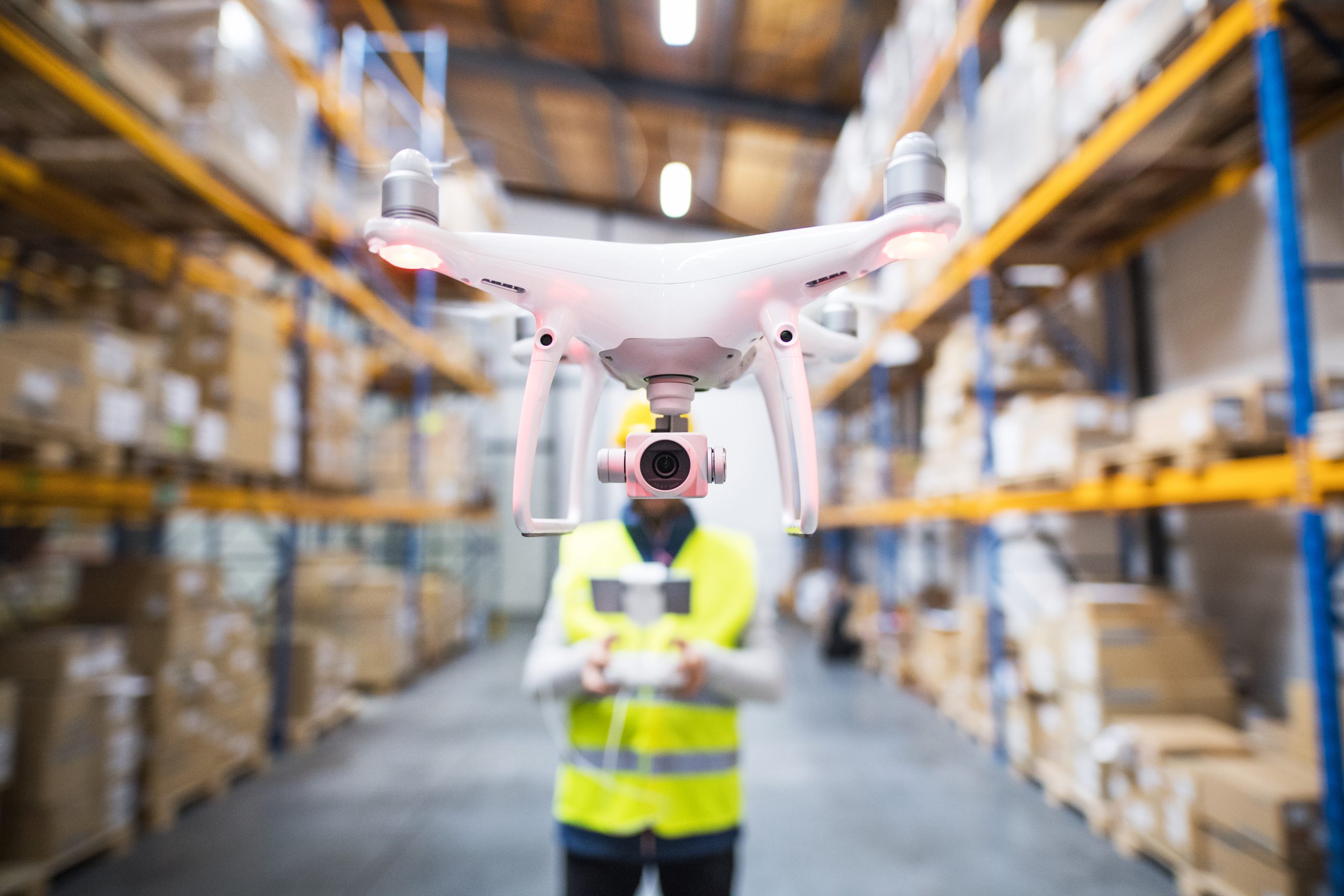
Warehouses are fascinating environments from a security standpoint.
They’re structured. Repetitive. Predictable. And full of high-value inventory.
That combination makes them uniquely suited for autonomous drone security.
If you think about it, a warehouse is almost purpose-built for systems that rely on consistency, data, and repeatable flight paths. Unlike dynamic public spaces or unpredictable outdoor perimeters, warehouses operate within controlled boundaries — fixed layouts, defined aisles, stable lighting, and established workflows.
That matters more than most people realize.
1. Structured Environments Favor Autonomous Systems
Autonomous drones perform best in environments where:
The layout doesn’t constantly change
GPS is unreliable but indoor navigation can be mapped precisely
Lighting conditions are stable
Obstacles are predictable
Warehouses check every one of those boxes.
Racking systems follow geometric patterns. Aisles are consistent. Dock doors are fixed. Once a warehouse is mapped, it doesn’t need to be relearned daily. That stability allows drones to execute precise, repeatable patrol routes with minimal drift or navigation uncertainty.
From an AI standpoint, consistency reduces noise in the data. And when you reduce noise, you improve detection accuracy.
That’s foundational.
2. Vertical Space Is Underutilized — and Drones Own It
Traditional warehouse security is ground-based.
Guards walk the floor. Cameras are mounted at fixed angles. Both approaches leave blind spots — especially in vertical space.
Warehouses are tall. Racking systems can extend 30–40 feet or more. Valuable inventory sits high above eye level. And fixed cameras, once installed, rarely adapt to shifting operational realities.
Autonomous drones operate in three dimensions.
They don’t just move through aisles — they move above them. They can inspect upper racking, scan for shrinkage indicators, monitor mezzanine areas, and verify dock door status from angles static systems can’t achieve.
In security, perspective matters.
Drones change the perspective.
3. Large Square Footage Makes Fixed Coverage Expensive
Many warehouses exceed 100,000 square feet. Some distribution centers push well beyond 500,000.
Covering that much space with human patrols is expensive and inconsistent. Guards can’t be everywhere at once, and fatigue is real.
Adding more fixed cameras increases capital expense and still leaves you with static viewpoints.
Autonomous drones, by contrast, are mobile coverage assets.
One system can patrol thousands of square feet per flight. Multiple missions can be scheduled overnight. AI analytics can flag anomalies in real time and escalate only when necessary.
It’s not about replacing people. It’s about extending visibility without multiplying labor costs.
4. Warehouses Operate in Predictable Rhythms
Security risk increases during predictable transition periods:
Warehouses typically run on structured schedules. That predictability allows autonomous drones to align patrols with known vulnerability windows.
For example:
Increased dock monitoring during peak loading hours
Perimeter-to-interior patrols after staff leave
High-frequency scans during inventory cycles
Autonomy works best when it can operate proactively rather than reactively. Warehouses provide that operational rhythm.
5. Inventory Density Raises the Stakes
Warehouses concentrate value.
Electronics. Pharmaceuticals. Consumer goods. Raw materials. Sometimes millions of dollars under one roof.
The risk isn’t just external intrusion. It includes internal shrinkage, misplaced pallets, tampering, and unauthorized access to restricted zones.
Because drones collect structured, time-stamped, repeatable footage, they create a searchable operational record. That improves:
Incident investigation
Audit validation
Compliance documentation
Dispute resolution
It turns security from passive monitoring into documented oversight.
That shift matters at scale.
6. Lighting and Environmental Stability Improve AI Performance
Outdoor environments introduce weather, shifting shadows, glare, precipitation, and seasonal variability.
Warehouses are controlled.
Lighting is consistent. Weather is irrelevant. Foot traffic patterns are defined.
For AI-powered detection systems, fewer environmental variables mean better performance tuning and lower false positive rates. In other words, the system can focus on identifying meaningful anomalies rather than compensating for environmental chaos.
That stability is an underrated advantage.
7. Integration With Existing Security Layers Is Straightforward
Most warehouses already have:
Access control systems
Dock door sensors
Fixed CCTV
Alarm panels
Autonomous drone security doesn’t replace these systems — it complements them.
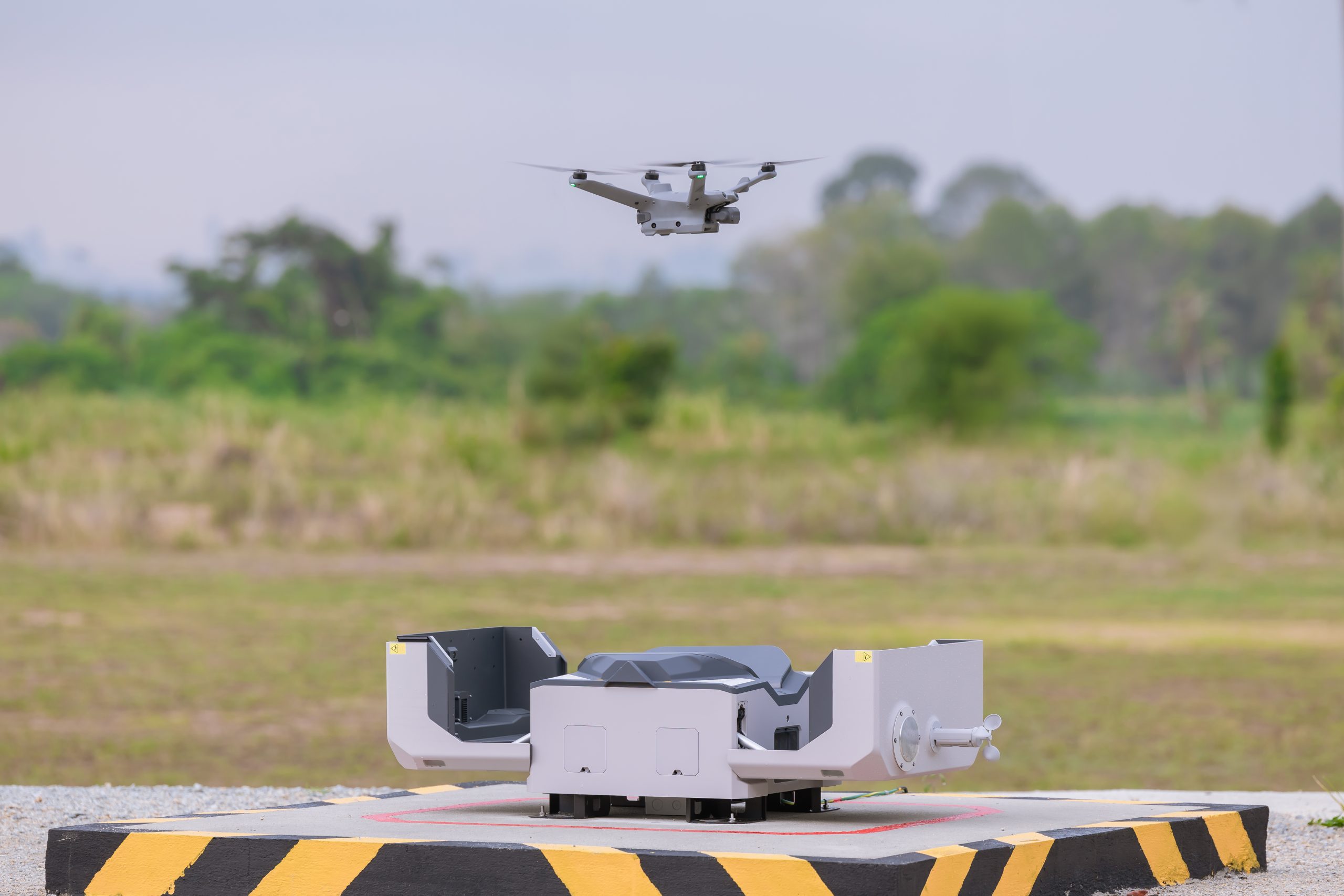
When an access control alert triggers after hours, a drone can autonomously launch to verify. When a door sensor flags open status, the drone can provide visual confirmation. When motion is detected in a restricted zone, the system can respond without waiting for a human dispatcher.
Layered security works best when each layer informs the next.
Warehouses provide the infrastructure to make that orchestration seamless.
A Practical Fit, Not a Futuristic Experiment
There’s a misconception that autonomous drone security is futuristic or experimental.
In reality, warehouses are one of the most practical environments for deployment.
They offer:
From a systems perspective, it’s a near-ideal match.
Autonomous security doesn’t require chaos to prove its value. It performs best where operations are disciplined and risk is measurable.
Warehouses fit that description.
When evaluating new security technology, the right question isn’t “Is this advanced?”
It’s “Where does this make operational sense?”
Warehouses make operational sense.
They are controlled environments with concentrated risk, defined workflows, and measurable security needs. That combination allows autonomous drone systems to operate at their highest level — not as novelty tools, but as structured, reliable components of a layered security strategy.
And in security, reliability beats novelty every time.