For decades, physical security has been largely reactive.
An alarm sounds.
A camera records.
A guard responds after an incident has already begun—or ended.
But today’s threat landscape no longer allows for delayed awareness. Theft, vandalism, trespassing, and infrastructure sabotage are becoming more sophisticated, faster, and harder to predict. As a result, the future of security is shifting away from passive monitoring toward intelligent, proactive threat management—driven by artificial intelligence and autonomous drones.
From Observation to Intelligence
Traditional security systems are designed to observe. Cameras capture footage, sensors trigger alerts, and humans interpret what they see. This approach has two major weaknesses:
- Human limitation – fatigue, distraction, and delayed reaction
- Information overload – too many alerts, most of them false
AI changes this model entirely.
Instead of simply recording activity, AI-powered systems analyze behavior in real time. They learn patterns, identify anomalies, and assess risk before an incident escalates. This shift—from observation to intelligence—is the foundation of next-generation security.
Why AI Alone Isn’t Enough
While AI software can analyze data quickly, it still depends on where that data comes from.
Fixed cameras have blind spots.
Static sensors only detect limited conditions.
Ground-based systems can’t adapt to dynamic environments.
That’s where autonomous drones become a force multiplier.
Drones as Mobile Intelligence Platforms
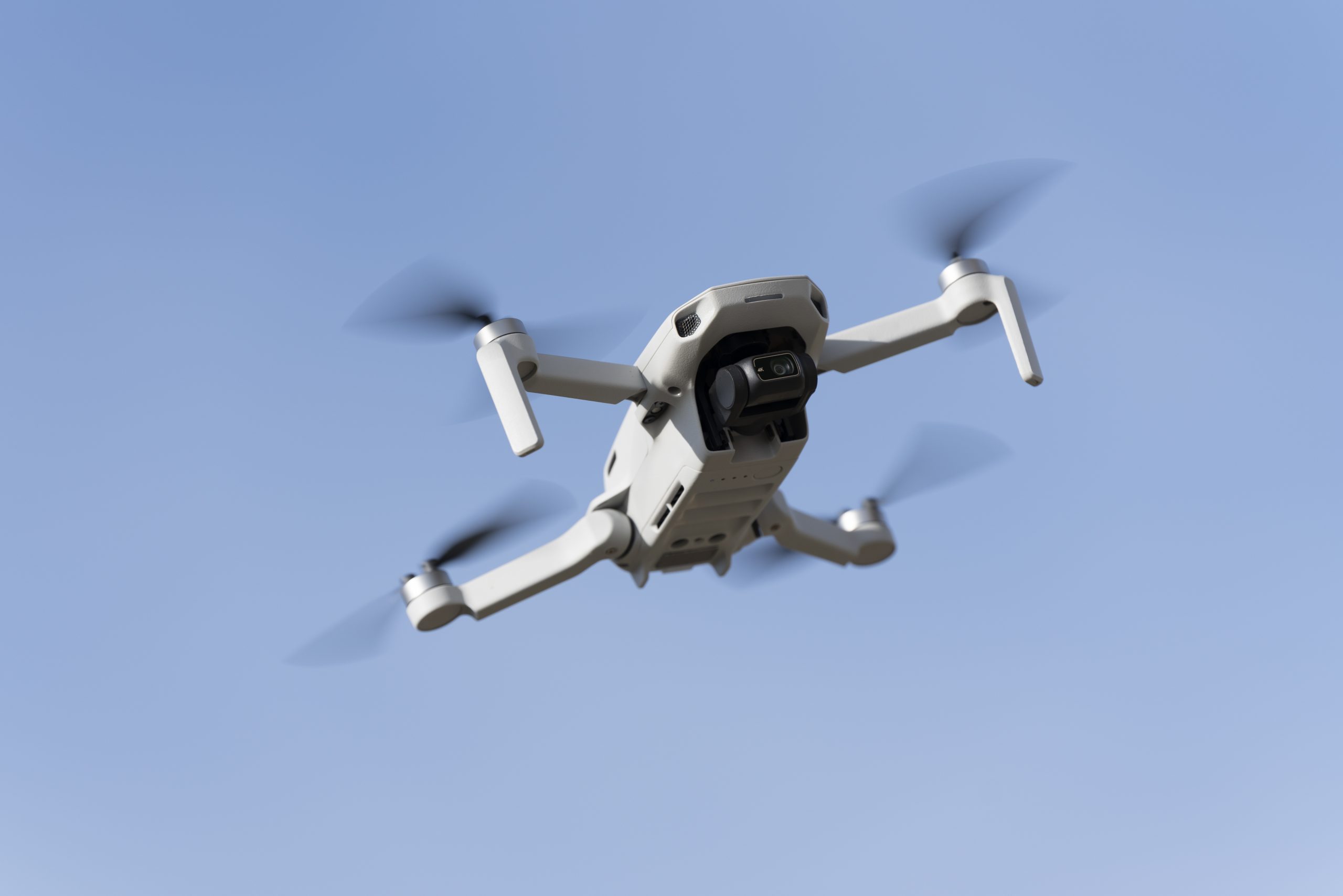
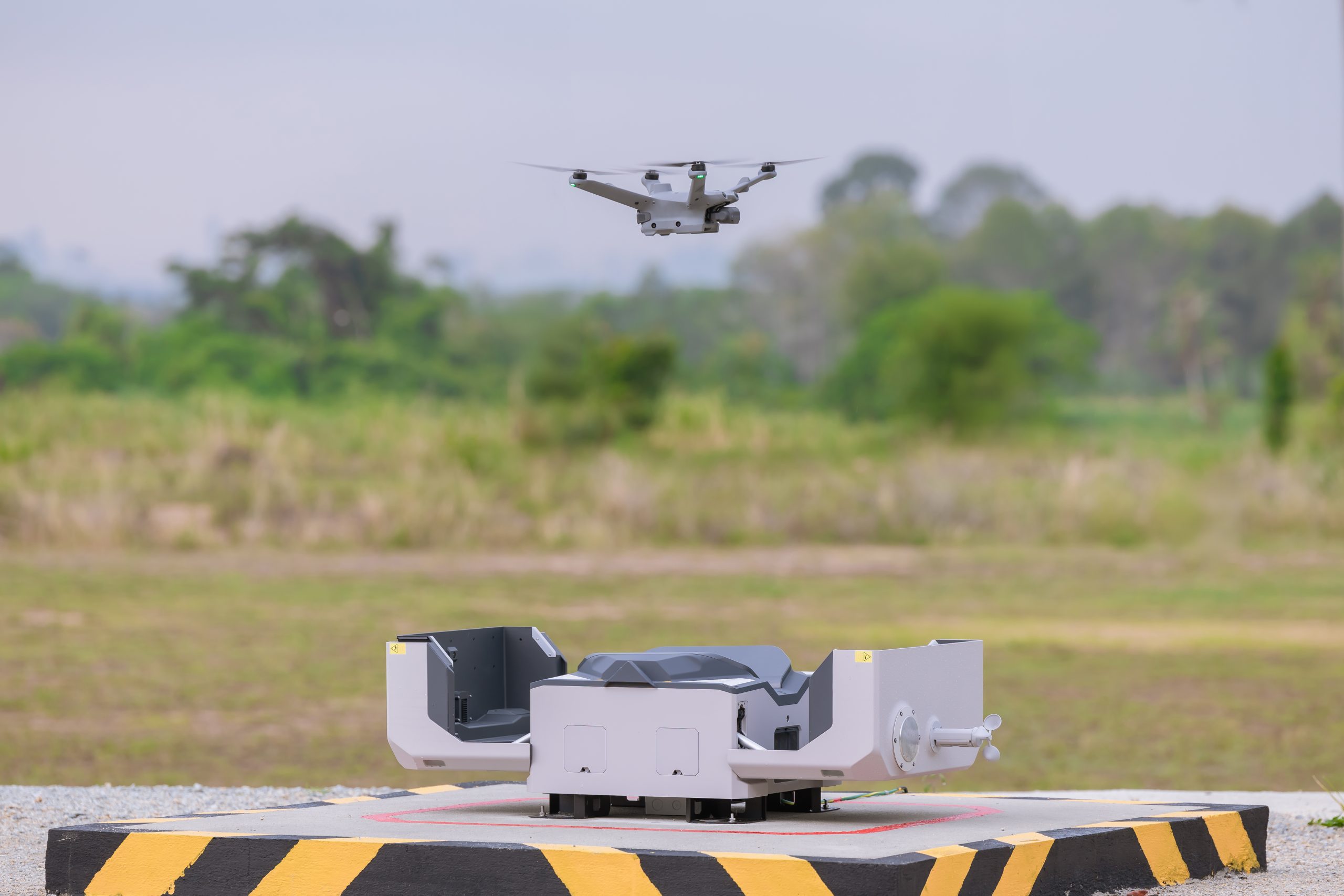
Security drones are not just flying cameras—they are mobile sensing platforms capable of covering large areas quickly and intelligently.
Equipped with AI, modern security drones can:
- Patrol predefined routes autonomously
- Detect motion, heat signatures, and restricted-area breaches
- Track suspicious activity across large perimeters
- Respond dynamically to alerts instead of waiting for human dispatch
Unlike fixed infrastructure, drones can move to the threat, providing immediate situational awareness from multiple angles.
This mobility turns security from a static defense into an active presence.
sodales at risus. Etiam a eros porta, pellentesque felis at, mattis augue. Nullam mollis eros ligula, interdum dictum odio eleifend dictum.
Proactive Threat Management in Action
Proactive security means identifying risk before damage occurs.
With AI-powered drones, systems can:
- Detect unusual movement patterns at odd hours
- Identify loitering behavior near restricted zones
- Recognize repeated perimeter testing or reconnaissance activity
- Automatically escalate verified threats to human teams
Instead of reacting to alarms, security teams receive actionable intelligence—what is happening, where it’s happening, and how severe the threat is.
The result is faster decision-making, fewer false alarms, and more effective intervention.
The adoption of AI and drone-based security isn’t just a technological upgrade—it’s a business advantage.
Organizations using proactive threat management benefit from:
- Reduced losses from theft and vandalism
- Lower reliance on continuous human patrols
- Faster incident response times
- Improved safety for personnel and assets
- Better documentation for compliance and insurance claims
Security becomes a strategic asset, not just a cost center.
As AI models grow more advanced and autonomous systems become more reliable, the future of security will be defined by systems that:
- Predict threats instead of reacting to them
- Adapt to changing environments in real time
- Integrate seamlessly with human decision-makers
- Operate continuously without fatigue or distraction
At Sentinel SkyGuard, this future is already taking shape. Our focus is on building intelligent aerial security solutions that help organizations stay ahead of threats—before they become incidents.
THE FINAL WORD:
The question is no longer if AI and drones will transform security.
It’s how quickly organizations are willing to adapt.
The future belongs to those who move from watching threats…
to stopping them before they happen.